What Needs to Be Calculated Before Installing Solar Cells for Factories?
As energy costs continue to rise, many factories are looking for ways to reduce long-term operational expenses. One of the most effective solutions today is installing a Solar Cell system for industrial facilities.
However, factory solar installation is not simply about placing panels on a rooftop. A well-designed system requires detailed analysis and calculations to ensure maximum efficiency, cost-effectiveness, and fast return on investment.
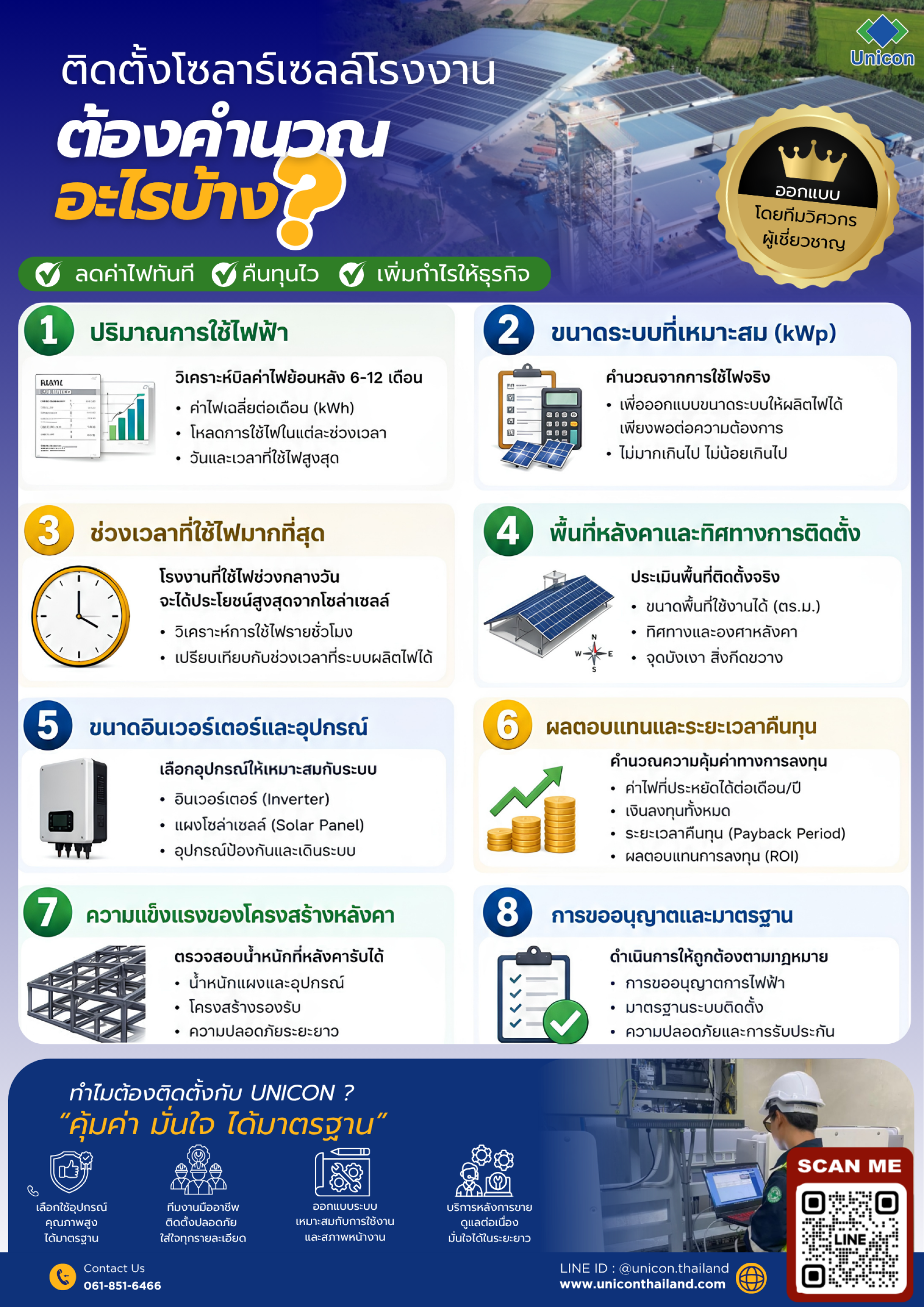
Here are the key factors that should be evaluated before installing a factory Solar Cell system.
1. Analyze Electricity Consumption
The first step is to review the factory’s electricity usage over the past 6–12 months to understand:
2. Calculate the Appropriate System Size (kWp)
Once electricity usage is analyzed, the next step is determining the appropriate Solar Cell system size.
A properly designed system should generate enough electricity to meet operational needs without overspending on unnecessary capacity or undersizing the system.
The calculation typically considers:
3. Evaluate Peak Electricity Usage Time
Factories that operate mainly during daytime hours gain the highest benefits from Solar Cell systems because solar energy can be used immediately after generation.
Important factors to analyze include:
4. Inspect Roof Area and Installation Direction
Roof space and installation conditions directly affect system performance.
Engineers usually evaluate:
Proper design ensures maximum energy production throughout the day.
5. Select Suitable Inverters and Equipment
Besides solar panels, selecting the right equipment is equally important — especially the inverter, which is considered the heart of the system.
Using high-quality components helps ensure:
6. Calculate ROI and Payback Period
Investment analysis is another critical factor when planning a factory Solar Cell system.
This includes:
7. Check Roof Structural Strength
Before installation, the building structure must be inspected to ensure it can safely support the weight of the solar panels and mounting equipment.
This assessment includes:
8. Permits and Installation Standards
Factory Solar Cell installations must comply with relevant laws, regulations, and engineering standards, including:
Why Choose UNICON?
UNICON provides complete industrial Solar Cell design and installation services by experienced engineers and solar specialists.
We help businesses analyze electricity usage, design customized systems, select high-quality equipment, and provide professional after-sales support to ensure long-term efficiency, safety, and investment value.
Turn Factory Electricity Costs Into Long-Term Profit
Electricity is one of the major operational costs for industrial businesses. As energy prices continue to rise, investing in Solar Cell systems becomes an increasingly valuable long-term solution.
If your business is looking to reduce operational costs, increase profitability, and build long-term energy stability, Solar Cell installation may be one of the smartest investments for modern factories today.
However, factory solar installation is not simply about placing panels on a rooftop. A well-designed system requires detailed analysis and calculations to ensure maximum efficiency, cost-effectiveness, and fast return on investment.
Here are the key factors that should be evaluated before installing a factory Solar Cell system.
1. Analyze Electricity Consumption
The first step is to review the factory’s electricity usage over the past 6–12 months to understand:
- Average monthly electricity usage (kWh)
- Average electricity costs
- Peak usage periods
- Power consumption patterns throughout the day
2. Calculate the Appropriate System Size (kWp)
Once electricity usage is analyzed, the next step is determining the appropriate Solar Cell system size.
A properly designed system should generate enough electricity to meet operational needs without overspending on unnecessary capacity or undersizing the system.
The calculation typically considers:
- Actual electricity usage
- Available installation space
- Machinery operating hours
- Investment budget
3. Evaluate Peak Electricity Usage Time
Factories that operate mainly during daytime hours gain the highest benefits from Solar Cell systems because solar energy can be used immediately after generation.
Important factors to analyze include:
- Machinery operating schedules
- Day-shift production hours
- Cooling system or HVAC usage periods
4. Inspect Roof Area and Installation Direction
Roof space and installation conditions directly affect system performance.
Engineers usually evaluate:
- Available installation area
- Roof direction and tilt angle
- Shading from nearby structures
- Structural strength of the building
Proper design ensures maximum energy production throughout the day.
5. Select Suitable Inverters and Equipment
Besides solar panels, selecting the right equipment is equally important — especially the inverter, which is considered the heart of the system.
Using high-quality components helps ensure:
- Stable system performance
- Continuous power generation
- Lower maintenance issues
- Long-term reliability
6. Calculate ROI and Payback Period
Investment analysis is another critical factor when planning a factory Solar Cell system.
This includes:
- Estimated monthly and annual electricity savings
- Total investment cost
- Payback period
- Return on investment (ROI)
7. Check Roof Structural Strength
Before installation, the building structure must be inspected to ensure it can safely support the weight of the solar panels and mounting equipment.
This assessment includes:
- Total system weight
- Roof support structure
- Roof age and condition
- Long-term safety standards
8. Permits and Installation Standards
Factory Solar Cell installations must comply with relevant laws, regulations, and engineering standards, including:
- Utility approval processes
- Electrical installation standards
- Safety protection systems
- Equipment and workmanship warranties
Why Choose UNICON?
UNICON provides complete industrial Solar Cell design and installation services by experienced engineers and solar specialists.
We help businesses analyze electricity usage, design customized systems, select high-quality equipment, and provide professional after-sales support to ensure long-term efficiency, safety, and investment value.
Turn Factory Electricity Costs Into Long-Term Profit
Electricity is one of the major operational costs for industrial businesses. As energy prices continue to rise, investing in Solar Cell systems becomes an increasingly valuable long-term solution.
If your business is looking to reduce operational costs, increase profitability, and build long-term energy stability, Solar Cell installation may be one of the smartest investments for modern factories today.